
Category Archives: real estate law

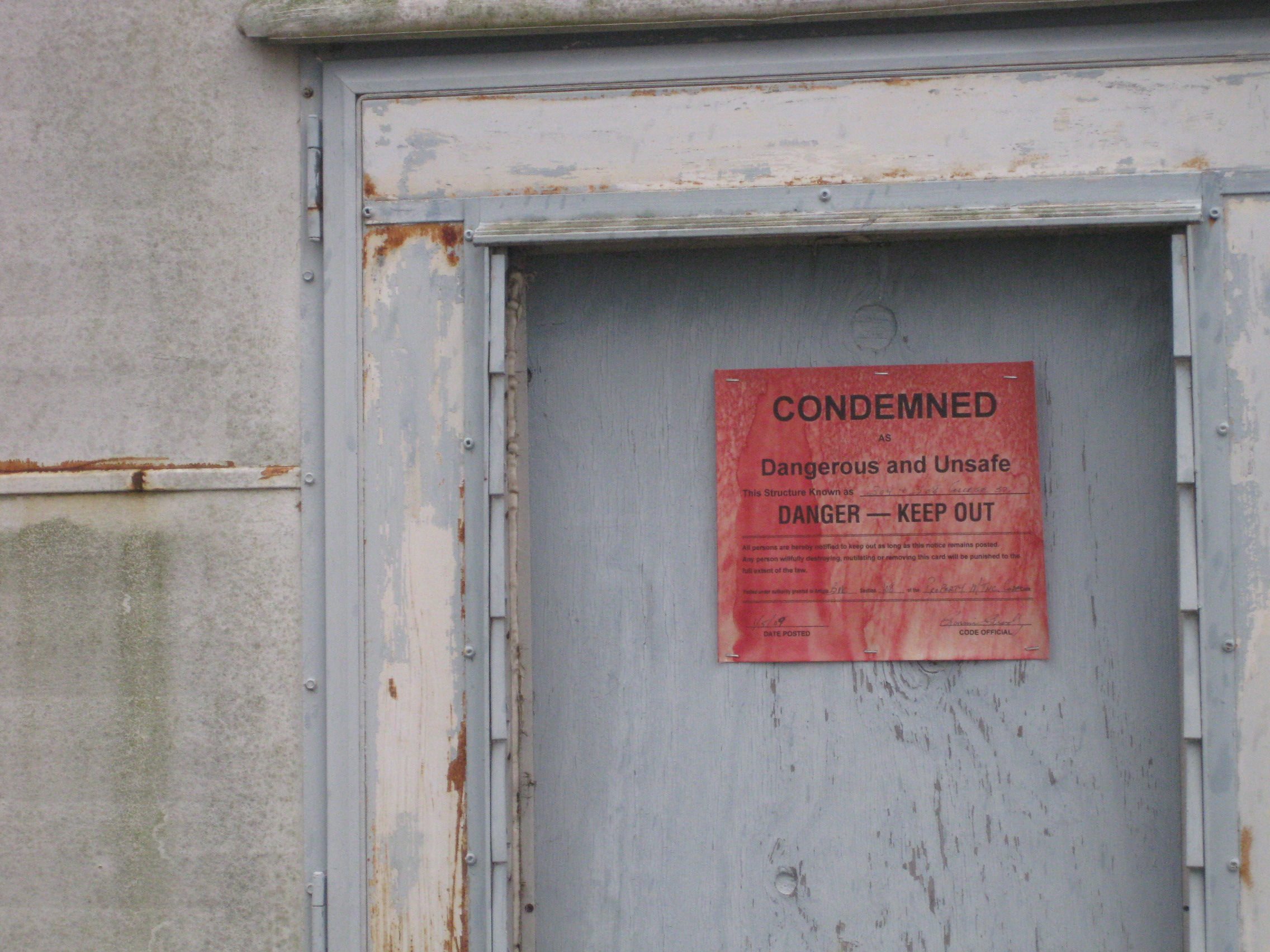
This property is condemned! How does that work?


img_0677

Condemnation of property gets the blood pumping. The signs posted on this dilapidated trailer by the City of Branson indicate that it is “condemned,” but most of us don’t understand exactly what this means.

Condemnation has two meanings for local governments and property owners: Read the rest of this entry

Nightly rental controversy in Ruidoso


I’m on vacation. I could have spent the night in a single-family home here in Ruidoso, New Mexico, rather than the Days Inn.

According to the local paper, the village council adopted an ordinance regulating nightly rentals after a judge ruled that this use was “residential.” The judge noted that the “business” aspects of nightly rentals–placing reservations and making payments–did not take place in the residences.

The new ordinance requires purchase of licenses, notice to neighbors, payment of lodging taxes, and placement of fire extinguishers in the homes. Violations can result in revocation of licenses after three complaints.

There are several hundred homes available for nightly rental in Ruidoso. The situation in the Branson and Table Rock Lake area is probably similar.

Good luck with that foreclosure, MERS members


A Missouri appellate court, without trying, may have drawn a map to a defense to foreclosures–if borrowers can figure it out before the Missouri Supreme Court overturns the decision in Bellistri v Ocwen. The opinion shows how an assignment of a loan to a servicing company for collection can actually make the loan uncollectible from the mortgaged property. Read the rest of this entry

Styron & Shilling’s HOA database project


Suppose you are buying a home in a subdivision. You don’t see many occupied houses in the subdivision, which is not in a city or town. But you see a water wellhouse and storage tank and maybe an odd looking structure that must be a sewer treatment plant or pumping station. You don’t see any signs indicating that these belong to a local government entity. You wonder who maintains the streets, the water system and the sewer system. The answer is that a homeowners’ association (HOA) is responsible for maintenance and operation of these essential facilities.

But where is the HOA?  You can’t find it in the phone book or on the internet. The public records are sketchy. Read the rest of this entry

Sunday night blues


sunset-at-k-dock1

Sunday evenings have become much worse for me, as the economy has deteriorated, and I’m sure I’m not alone.

I used to spend a couple of hours making lists, getting ready for a week of new people and new projects.

Now I try to figure out how to get the things done that I should have finished last week, but couldn’t get to because of all the urgent requests and attempts to wrap up jobs that have been hanging for months, waiting on something, usually money-related.

On each Sunday night this winter, I’m facing a week of these kinds of calls:
• “I’m being evicted, and I have no place to go.”
• “I’ve worked as a sub for this general contractor for 10 years. The last draw on the last job wasn’t paid. How can I collect? The general is my friend and promises me more work.”
• “Can you make a power of attorney for my aunt to sign? She’s showing signs of Alzheimers, and she promised me that she would give me her home if I’d take care of her. If we wait any longer, it might be too late.”
• My house is being foreclosed on Thursday. How long can I stay there?”
• “The bank wants my truck and my tools. If they would take my truck, I could get by, if I can keep my tools.”
• “How soon can you get a deadbeat out my rent house? He hasn’t paid the rent for six months.”
• “Do you have any openings?”

Though I’m fortunate to be receiving these calls instead of making them, it’s hard to look forward to Monday.

My heart goes out to those who are going to make those calls. I wish I could help.
HOA trustees can enforce covenants, even though they didn’t have annual meetings


If you want to stop a homeowners association from collecting assessments or enforcing restrictions, often the best tactic is to smear the HOA.

Here’s how the smear works. Read the rest of this entry

Defunct HOAs: what to do?


Outside of incorporated cities in the Ozarks, the homeowner association (HOA) is often the government for homes in subdivisions and condominiums. The clean water rules enforced by the Missouri Department of Natural Resources include HOAs as eligible “continuing authorities” to own and operate drinking water or sewer facilities, or both, in subdivisions not served by public utility companies regulated by the Public Service Commission or by governmental providers. In addition, the HOAs often have the responsibility of maintaining subdivision streets unless and until the county commission adopts an ordinance to maintain the streets.

HOAs are ordinarily established by the subdivision developer, in order to obtain permits for sewer or water facilities and to create an entity for road maintenance. An HOA’s power to collect assessments from lot owners (or unit owners, in the case of condominiums) is established by the recording of subdivision covenants (usually called CCRs or a declaration). The HOA is almost always set up as a non-profit corporation, with the developer and the developer’s associates making up the initial board of directors.

Even under the best of circumstances, the developer fails to file annual reports for the HOA with the Missouri Secretary of State, and the HOA, as a corporation, is administratively dissolved. When few lots are sold, that also happens. And there are worse omissions and consequences: Read the rest of this entry

Important legal terms: “I grandmawed it! Ain’t I grandfathered?”


By Harry Styron

As the Ozarks becomes suburban, there are many clashes between the old economy and ways of life and the new, expressed in colorful language. A couple of familiar terms are sometimes used in ways that sound funny, especially used as verbs.

Grandfathering
“Grandfathering” as a legal term is not peculiar to the Ozarks and seems to mean here what it means anywhere. It is the concept by which something that has been done in the past is lawful for that reason, regardless of any new laws.

The historical origin of the term is ugly: Read the rest of this entry